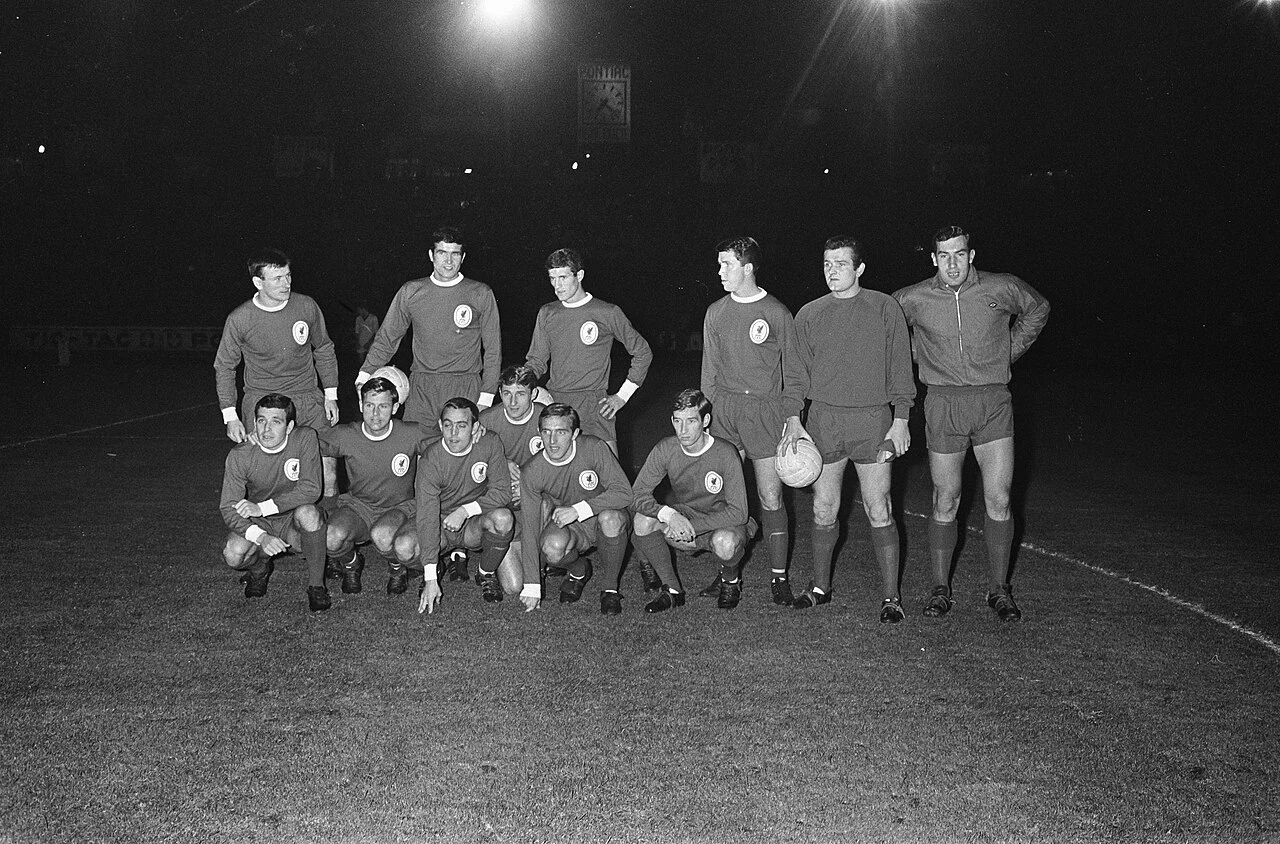
On 1 May 1965 Liverpool beat Leeds United 2–1 after extra time at Wembley to win the FA Cup for the first time. Roger Hunt opened the scoring, Billy Bremner equalised and Ian St John headed the winner from Ian Callaghan’s cross. All three goals came after a goalless ninety minutes.
Liverpool’s accounts also record Gerry Byrne playing on with a broken collarbone and supplying the cross for Hunt’s goal. That is part of the match’s history. Remembering his contribution does not require turning an injury into an expectation that today’s players should ignore their health.
The first one changes the photograph
A trophy picture can look interchangeable until you know what preceded it. This was not another addition to an established sequence of Liverpool cup wins. The club had existed since 1892 without winning this competition. Ron Yeats lifting it records the end of that particular absence.
The scoreline also resists a neat story of inevitable superiority. Leeds took the game beyond normal time and answered the opening goal. The winning moment means more when the opponent remains a real team with a claim on the afternoon.
Look beyond the scorer
Try following the assists when revisiting an old final. The familiar name at the end of a move is only one part of its construction. A cross, a run and the space made by somebody outside the frame deserve a place in the memory.
And keep the return journey in the record. A programme or a photograph from the homecoming can show how a match became a city event. If your family has either, the small details matter: where the camera stood, who took it, who kept the paper, and whether the date was written down at the time.
Reading & sources
What is your take?
Does your family have a programme or homecoming photograph from 1965? Tell us its story.
Join the conversation →Keep reading
A name bigger than a stand.
The Kop’s story includes a new terrace, a war and a name whose beginnings are still debated.
The city comes with it.
Anfield, the Liver Building, the streets between. There is more than one way to picture belonging.