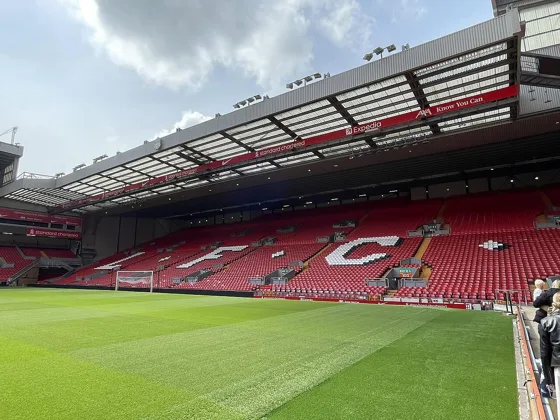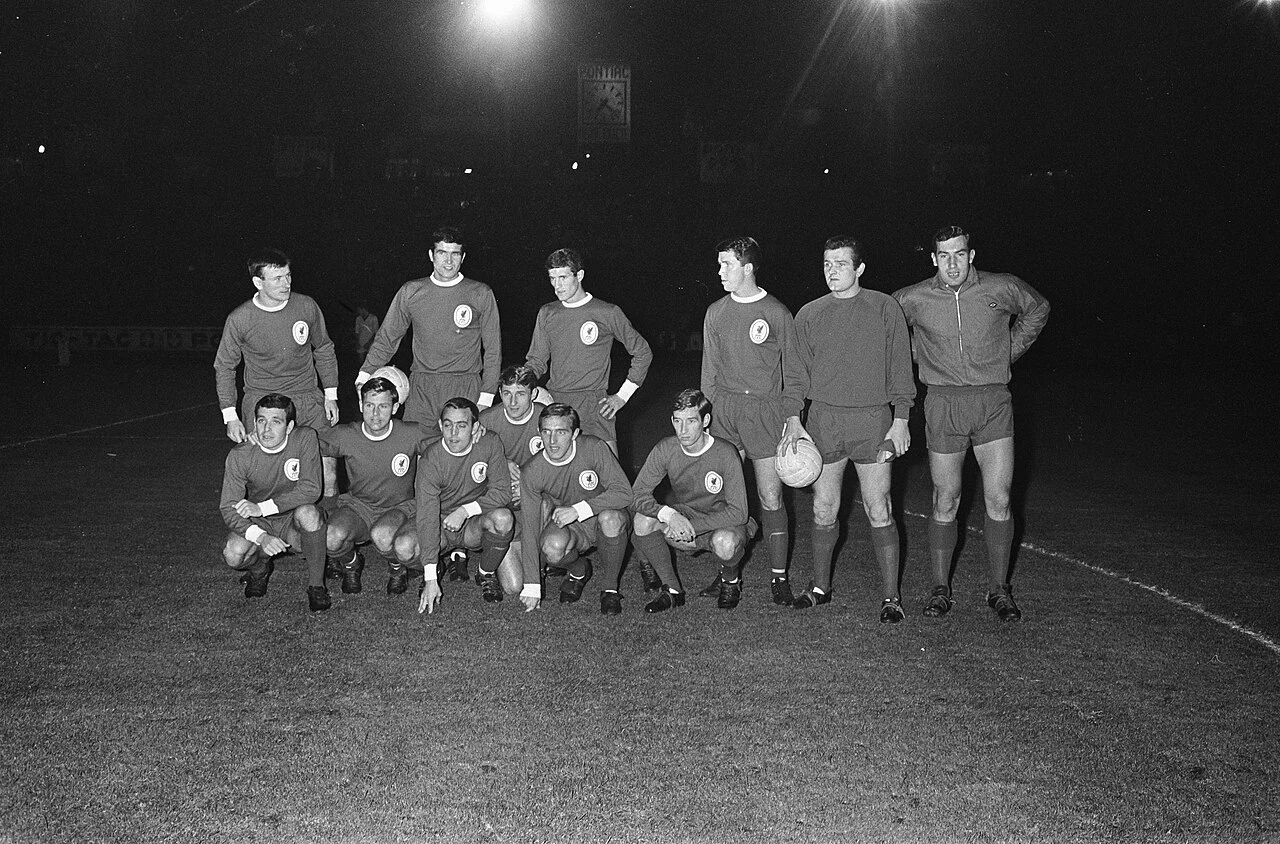
The date usually attached to Liverpool’s change of appearance is 25 November 1964, against Anderlecht at Anfield. Liverpool won 3–0. The club’s anniversary account describes the move to red shorts alongside red shirts, but adds a detail often lost in the retelling: the socks that night were still white.
That distinction matters. “The beginning of the all-red look” and “every part of the strip was red in that match” are different claims. The enduring visual identity emerged from a change whose shorthand has become cleaner than the evidence.
A colour can carry a whole team
For a painter or photographer, a kit works at more than one distance. Close up, it has seams, badges and texture. Across a pitch, it becomes a moving block of colour. A change in shorts alters the silhouette as much as the catalogue description.
Our reading is that this helps explain why supporters remember strips so strongly. The design belongs to the player, but also to the person watching: a television picture, an early match, a shirt passed down, a photograph on a wall. It is visual memory attached to a particular period of life.
Let the picture disagree
If an old image complicates a familiar story, do not crop away the complication. Check whether it was taken during the match in question. Check whether a later caption has travelled with an earlier photograph. A confidently repeated label is not the same thing as a dated original.
A useful personal kit archive can begin with three columns: what the photograph shows, what the caption says, and what you can independently establish. The white socks are exactly the sort of small observation that makes the exercise worthwhile.
Reading & sources
What is your take?
Which Liverpool strip can you recognise from a tiny detail, and why does it matter to you?
Join the conversation →Keep reading
A name bigger than a stand.
The Kop’s story includes a new terrace, a war and a name whose beginnings are still debated.
The city comes with it.
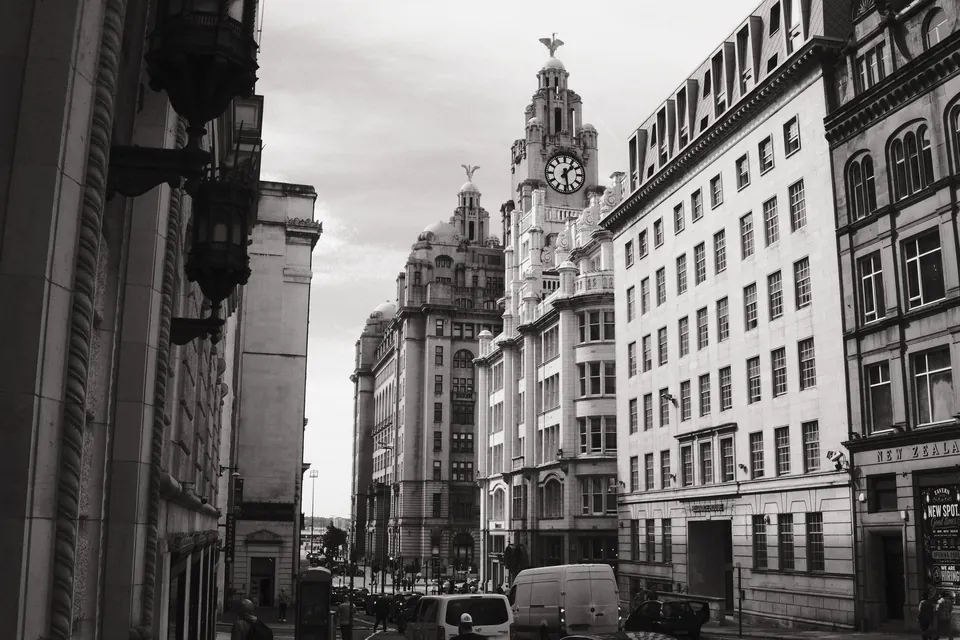
Anfield, the Liver Building, the streets between. There is more than one way to picture belonging.