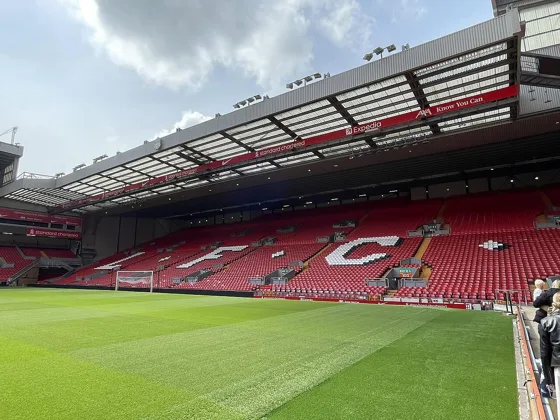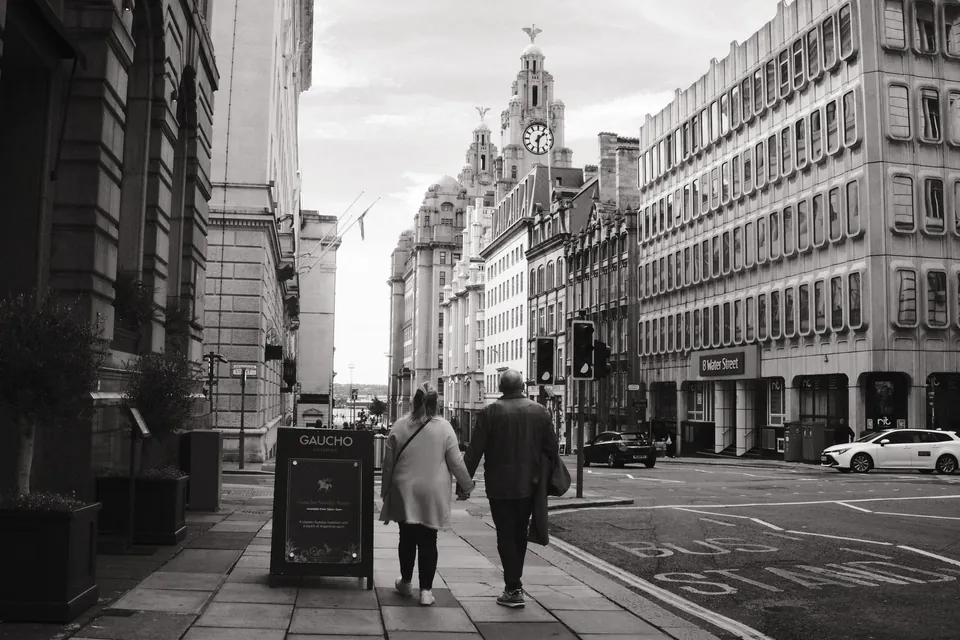
The stadium is the obvious subject. It need not be the only one. A photograph of the approach can describe expectation; a picture after the game can describe the distance between a result and the rest of the day.
For the first Liverpool photo essays, the intention is to keep that ordinary experience visible. These are working ideas for photographs still to be made, not captions for imaginary pictures.
Give five pictures different jobs
Begin with an establishing view that locates the route. Move closer for a detail: worn lettering, a reflection or the meeting of two colours. Include a frame that shows scale through a figure or a stretch of street. Then look for a transition, such as the ground appearing between buildings. Finish with something that feels like leaving.
Those are prompts, not a compulsory sequence. If a better story appears, follow it. Five nearly identical stadium views are unlikely to become a varied essay merely because they have different filenames.
Let the weather belong
A grey day does not need to be disguised as golden light. Rain changes surfaces, contrast and distance. Grain, blur or a tilted edge can serve a picture when they describe the experience; they should not be added automatically to make an ordinary frame look rebellious.
Make a clear distinction between an observed photograph and a constructed image. If an edit changes what happened in the scene, the caption should not imply that the result is a straightforward record.
Edit after the excitement
Put the pictures in order without captions first. Remove the one that repeats another image’s job. Then write a short caption for each, adding place and date where known. A final paragraph can explain what drew you to the walk.
Our own photographs will arrive when Mark has made them. In the meantime, supporters can share work they own and the story of why they stopped to take it.
Reading & sources
What is your take?
Share one photograph from the walk to or from a match, with its place, date and your own words.
Join the conversation →Keep reading
Football belongs to the people.
A fanzine starts with a point of view. Here is ours.
Liverpool 4–3 Villarreal: enjoy it, then ask questions.
The comeback and the concession of three goals can both matter. Reaction to the match on 20 October 2026.